Summoning the Sound Beasts
召喚神獸之聲
Developed for the Creative Sandbox Mythical Beast Summer Camp
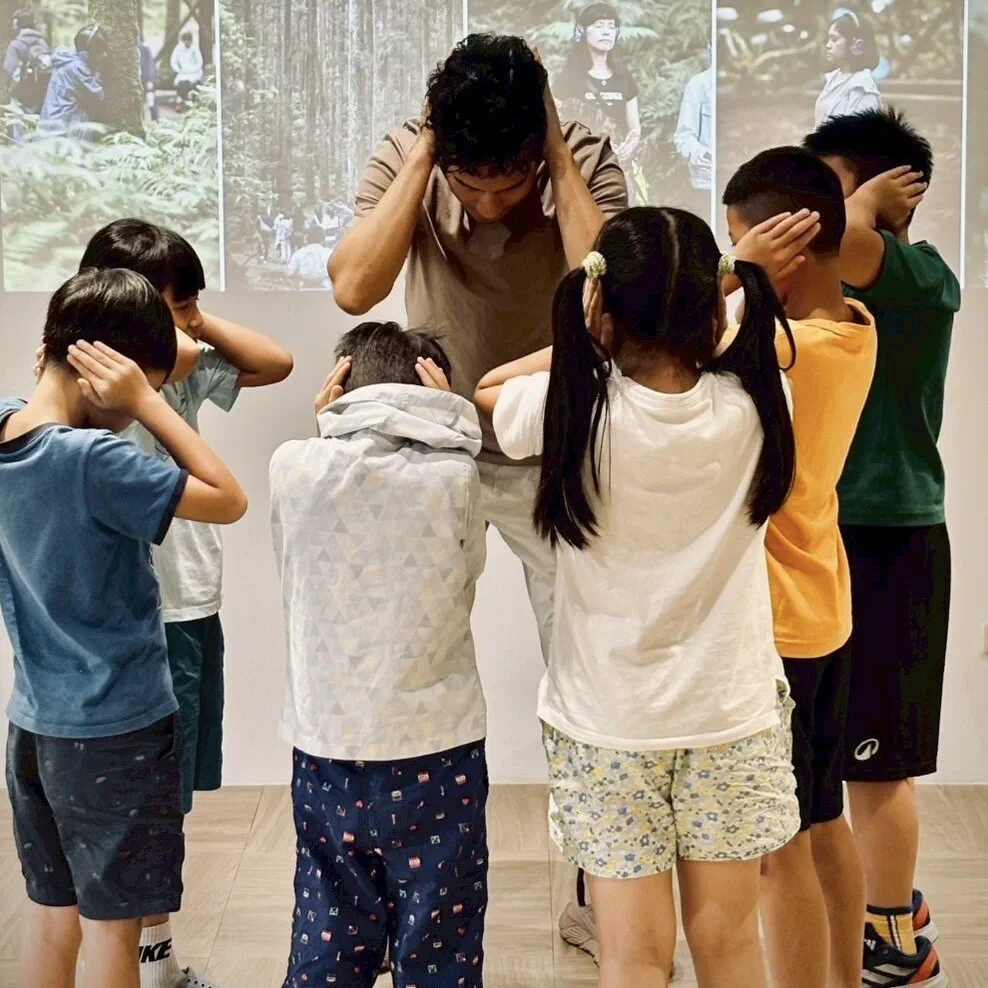
The project approaches recording, imitation and invention as ways for children to reconsider their relationship with themselves and their surroundings. Sound functions not merely as an effect accompanying a story, but as character, space and emotion in its own right.
Opening the Ears
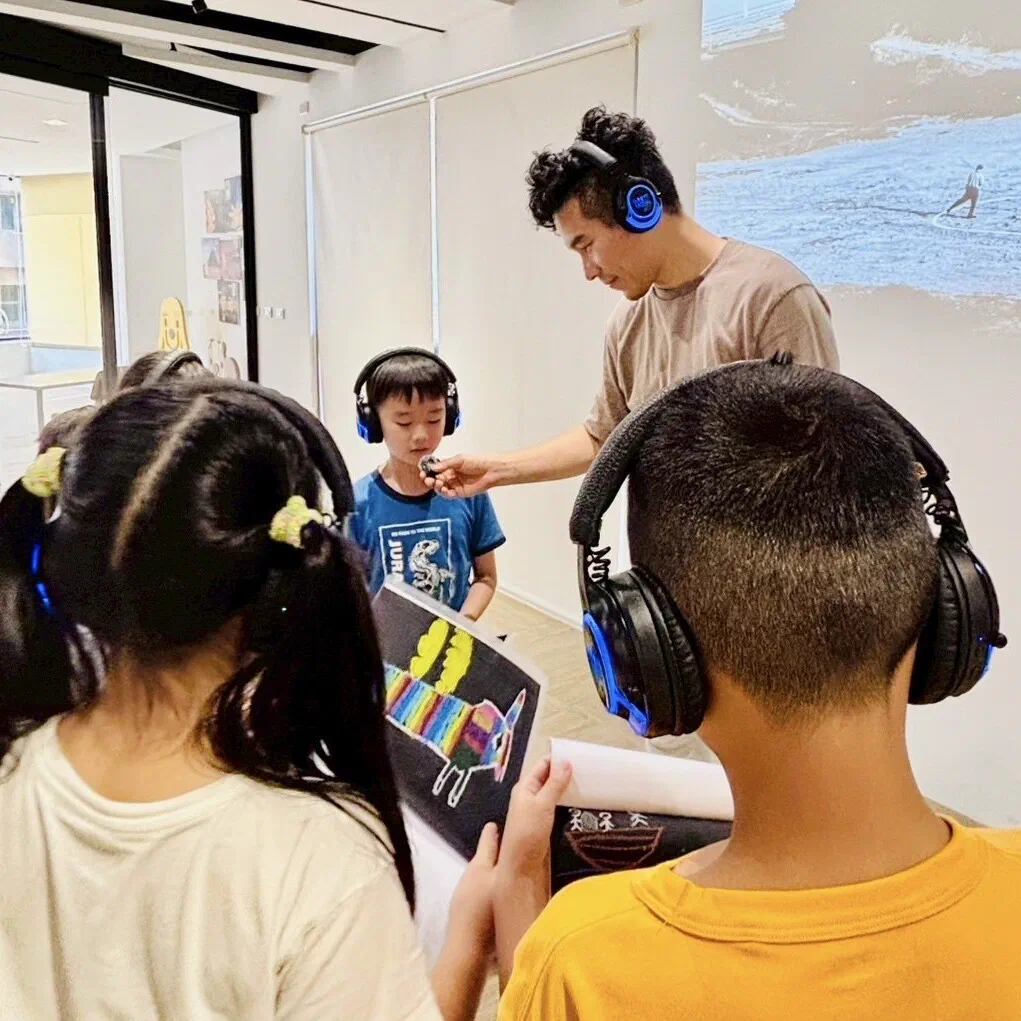
The process began with closed-eye listening. Participants attended to breathing and bodily sounds, identified whether sounds came from the left or right, near or far, above or below, and translated the surrounding soundscape into drawings.
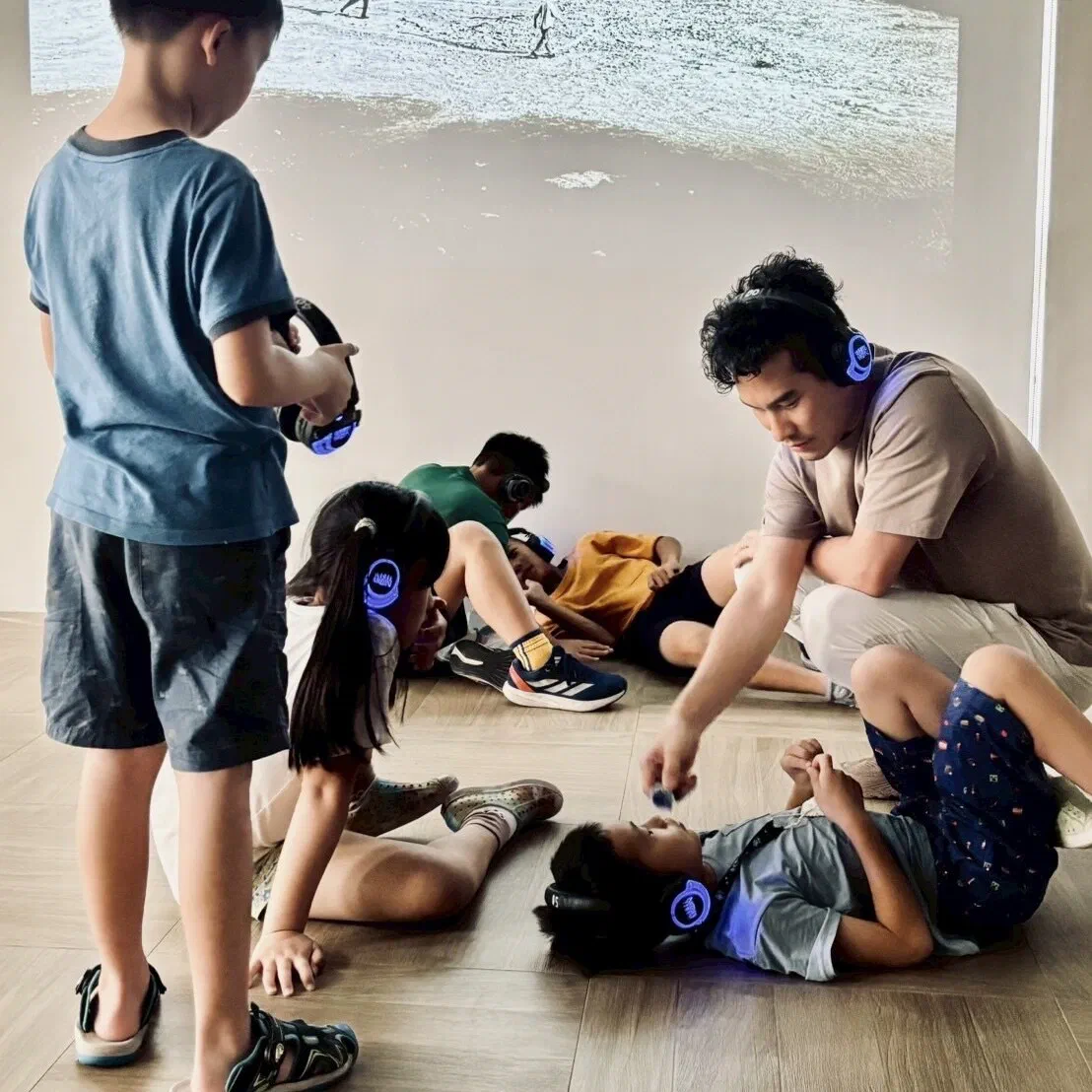
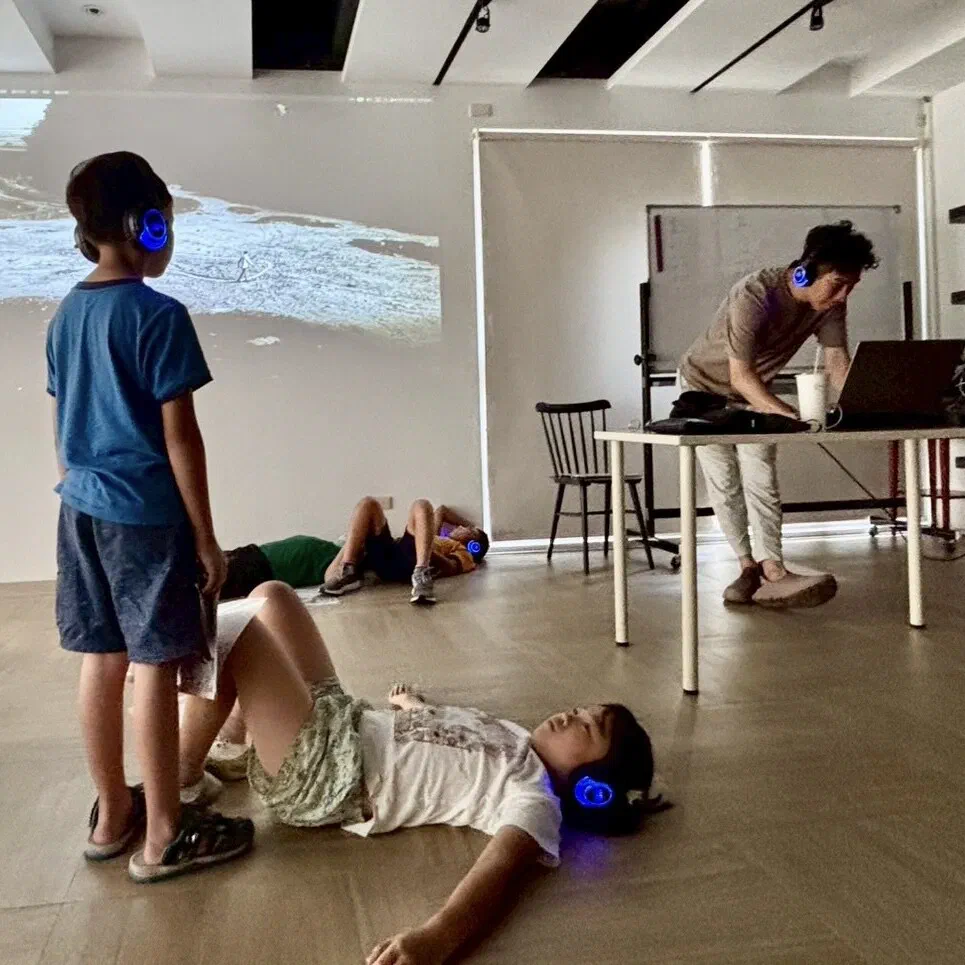
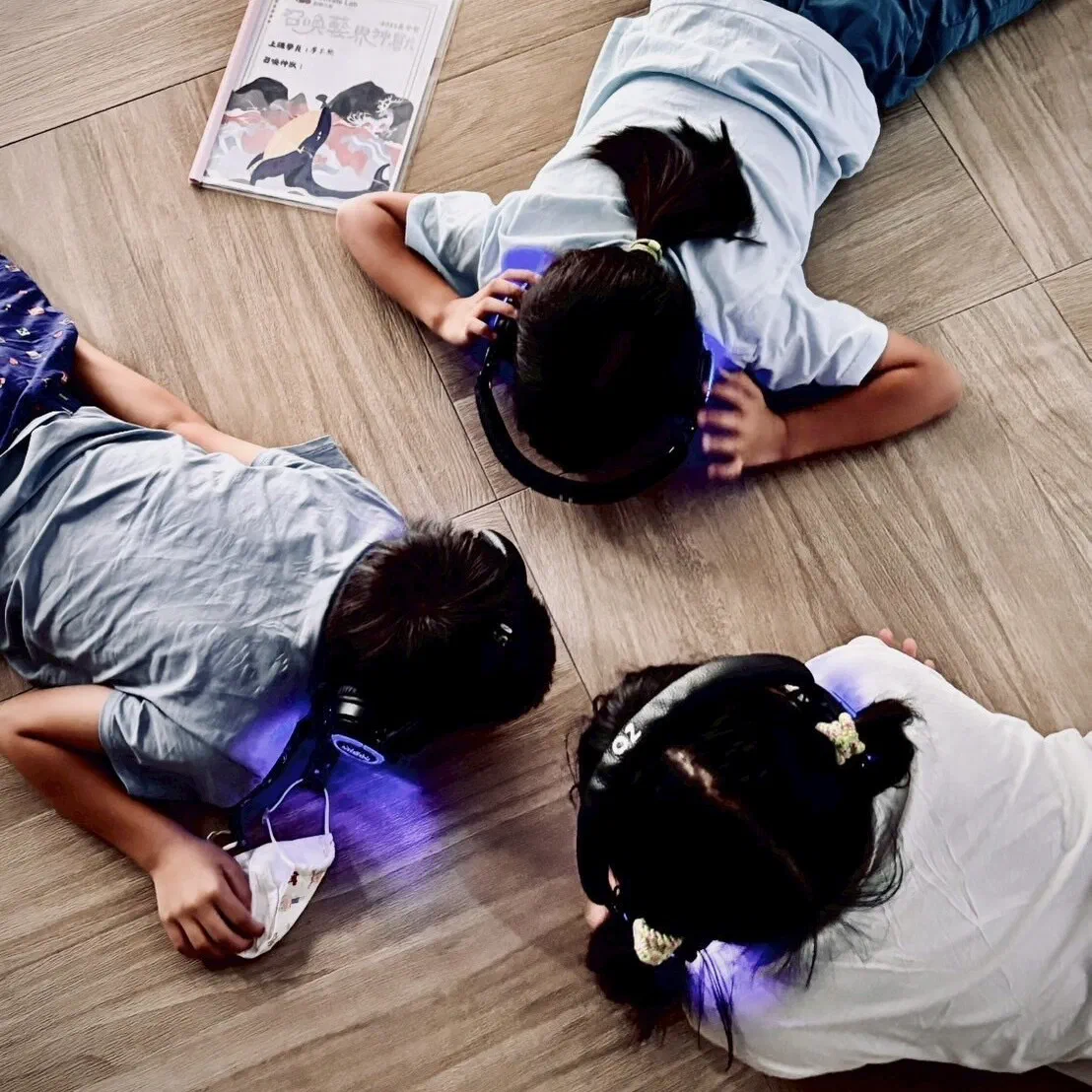
Listening before looking temporarily altered the familiarity of the space. Details usually pushed into the background became perceptible, allowing everyday sound to emerge as material for observation and imagination.
Finding the Beasts’ Habitats
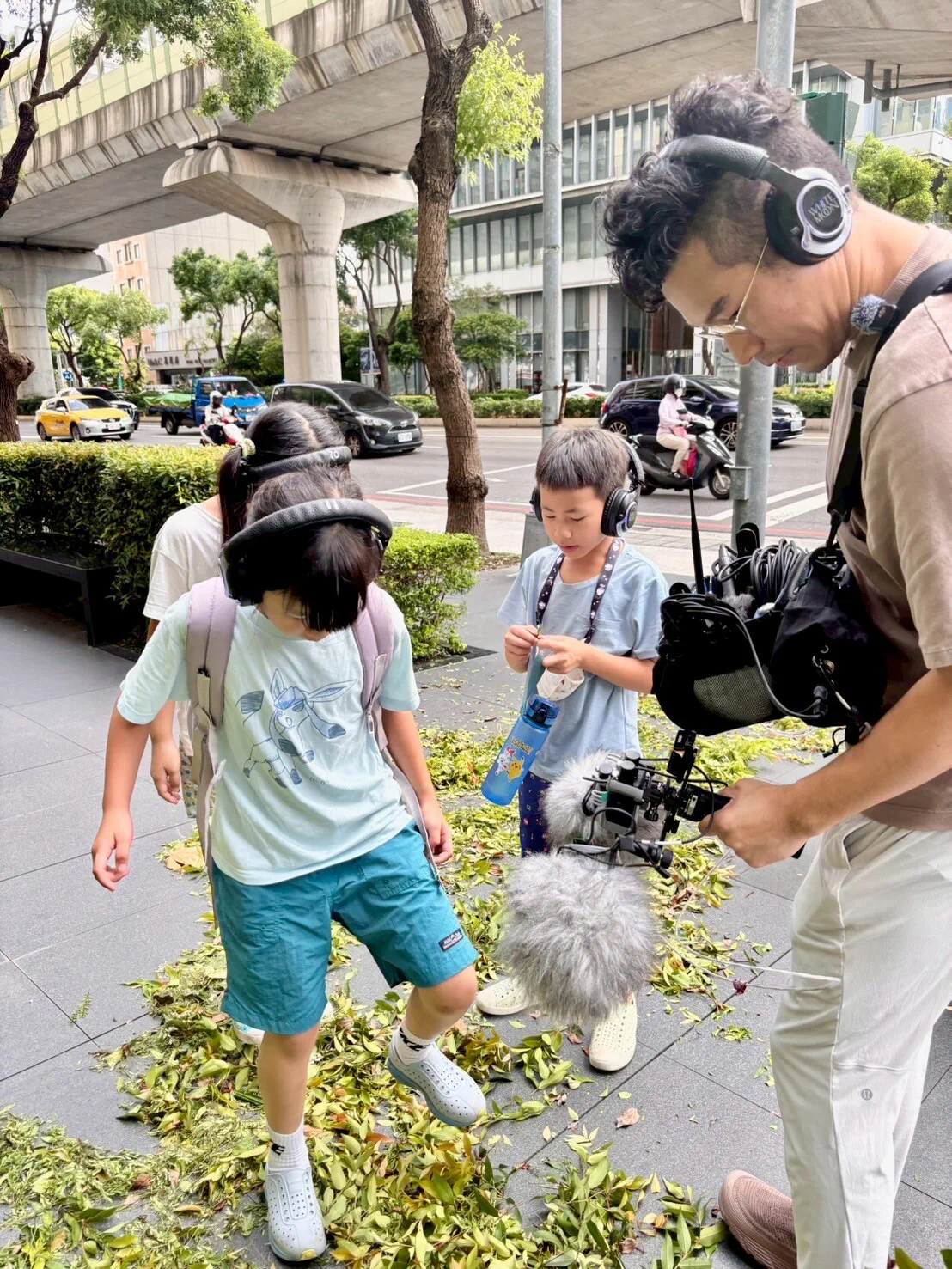
Equipped with recording devices, the children explored outdoor and surrounding environments in search of places where their imagined creatures might live.
Water, arcade machines, leaves, grass, mechanical sounds and footsteps became sonic clues. As they recorded, participants developed names, habitats and acoustic characteristics for their creatures, allowing sound to guide the formation of each character before its visual appearance was fixed.
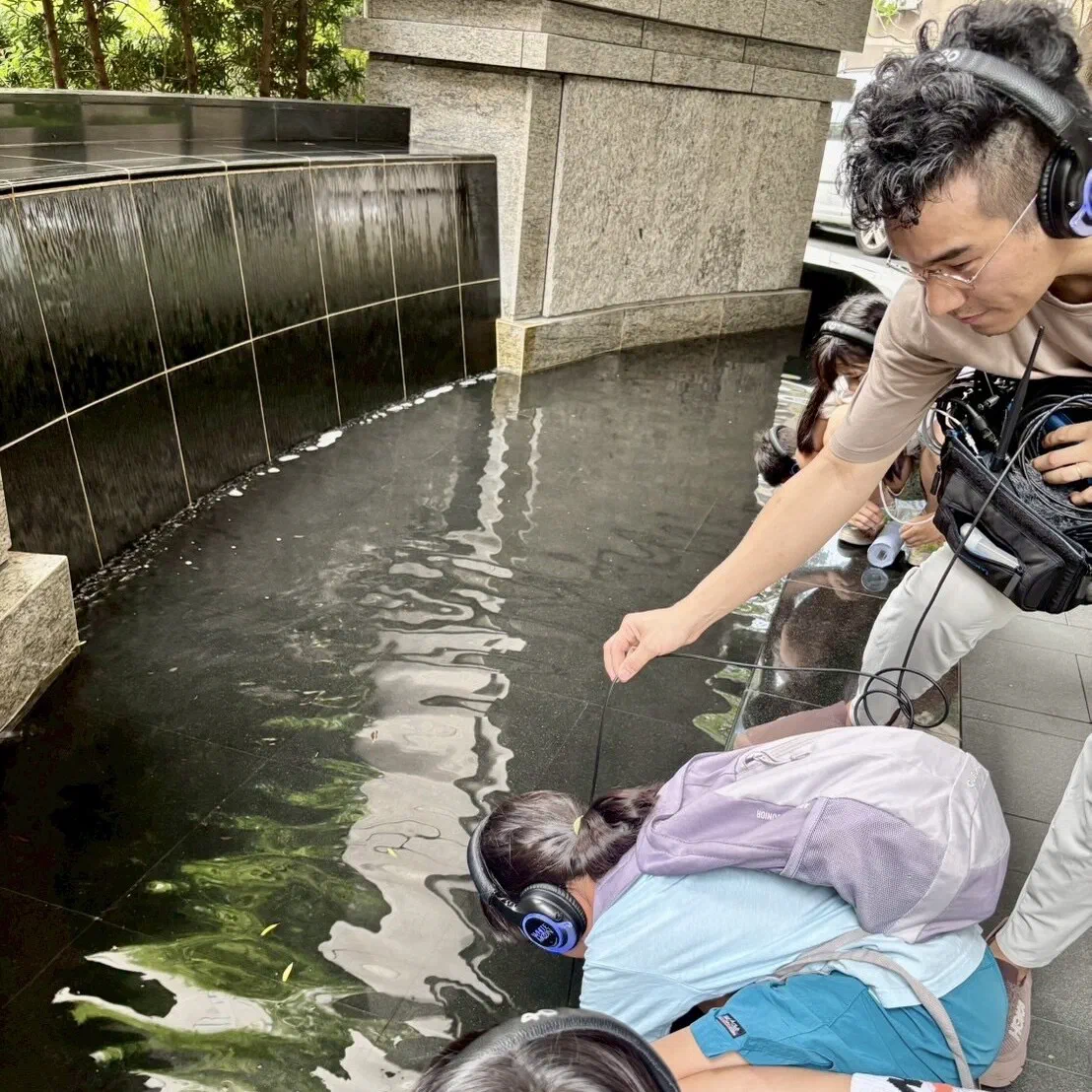
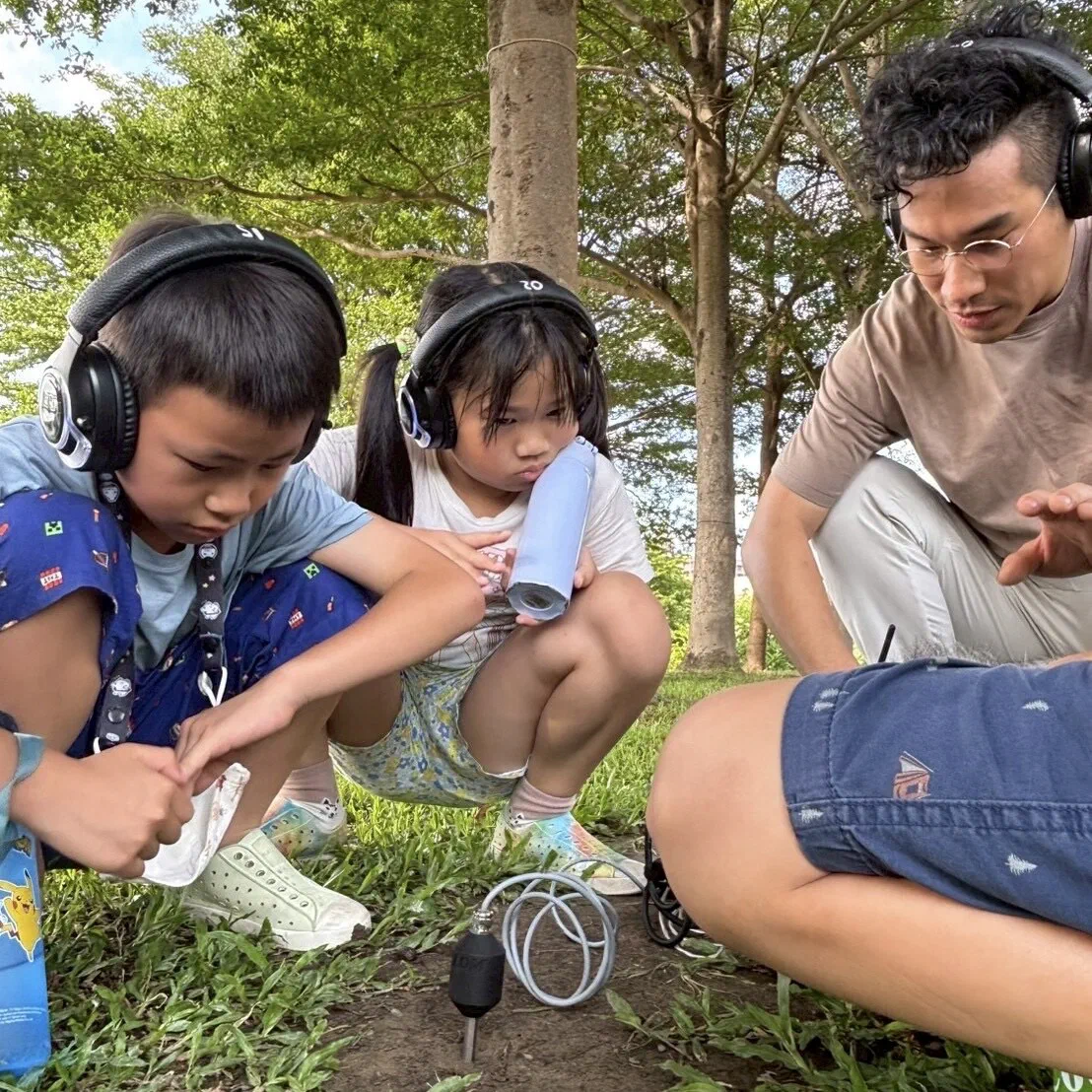
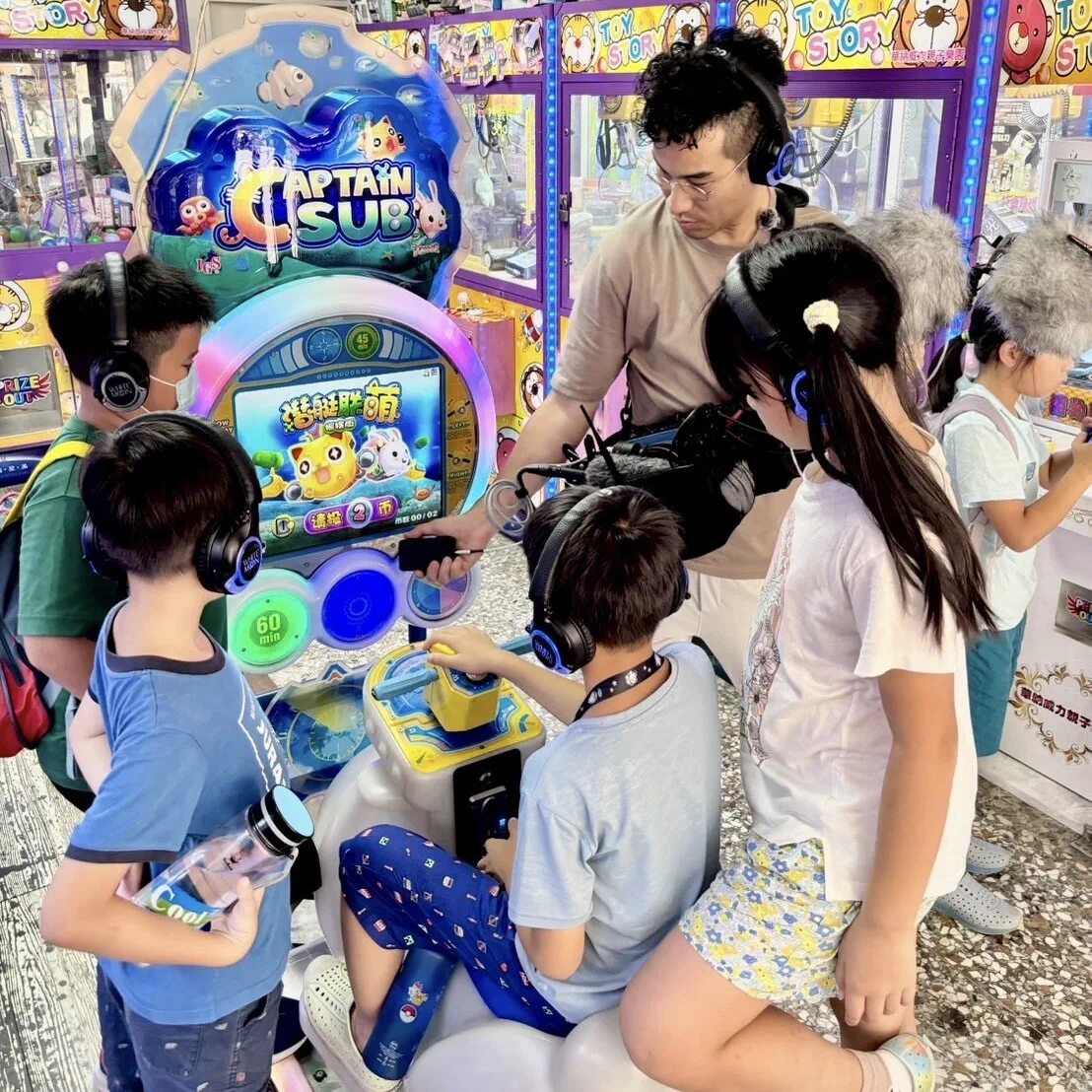
Field recording became more than a technical exercise. It offered a way to discover forms of life within familiar environments that had not yet been named.
Transforming Sound
The collected recordings and everyday materials became the basis for Foley experiments. Paper, fabric, water, glass, plastic bags, branches and other objects were used to create the sounds of moving bodies, beating wings, breathing and low calls.
The aim was not realistic imitation. Participants explored how sound could transform the perceived identity of a material: a plastic bag could become a pair of wings, water could become a creature’s breath, and an ordinary object could enter an imagined world.
Sound-Beast Theatre
In the final stage, participants combined field recordings, Foley, bodily movement and narrative to create short group performances introducing their sound beasts.
Individual sounds developed rhythm, space and tension through rehearsal and mutual response. The children were required not only to perform, but also to listen—to decide when a sound should enter, when it should stop and how different creatures might coexist within the same acoustic space.
The project concluded with a collective summoning of the sound beasts. What began as an individual act of imagination acquired a new form through the group.
Credits
- Concept, Workshop Design and Facilitation
- Jez Fang
- Programme
- Creative Sandbox Mythical Beast Summer Camp
- Partner
- Creative Sandbox
- Location
- Taichung, Taiwan
- Year
- 2025
- Medium
- Environmental listening, field recording, drawing, Foley, bodily movement and sound theatre