Along the Xindian River
沿著新店溪
- Medium
- Field recording, underwater sound, oral history, participatory listening
Beneath the Surface
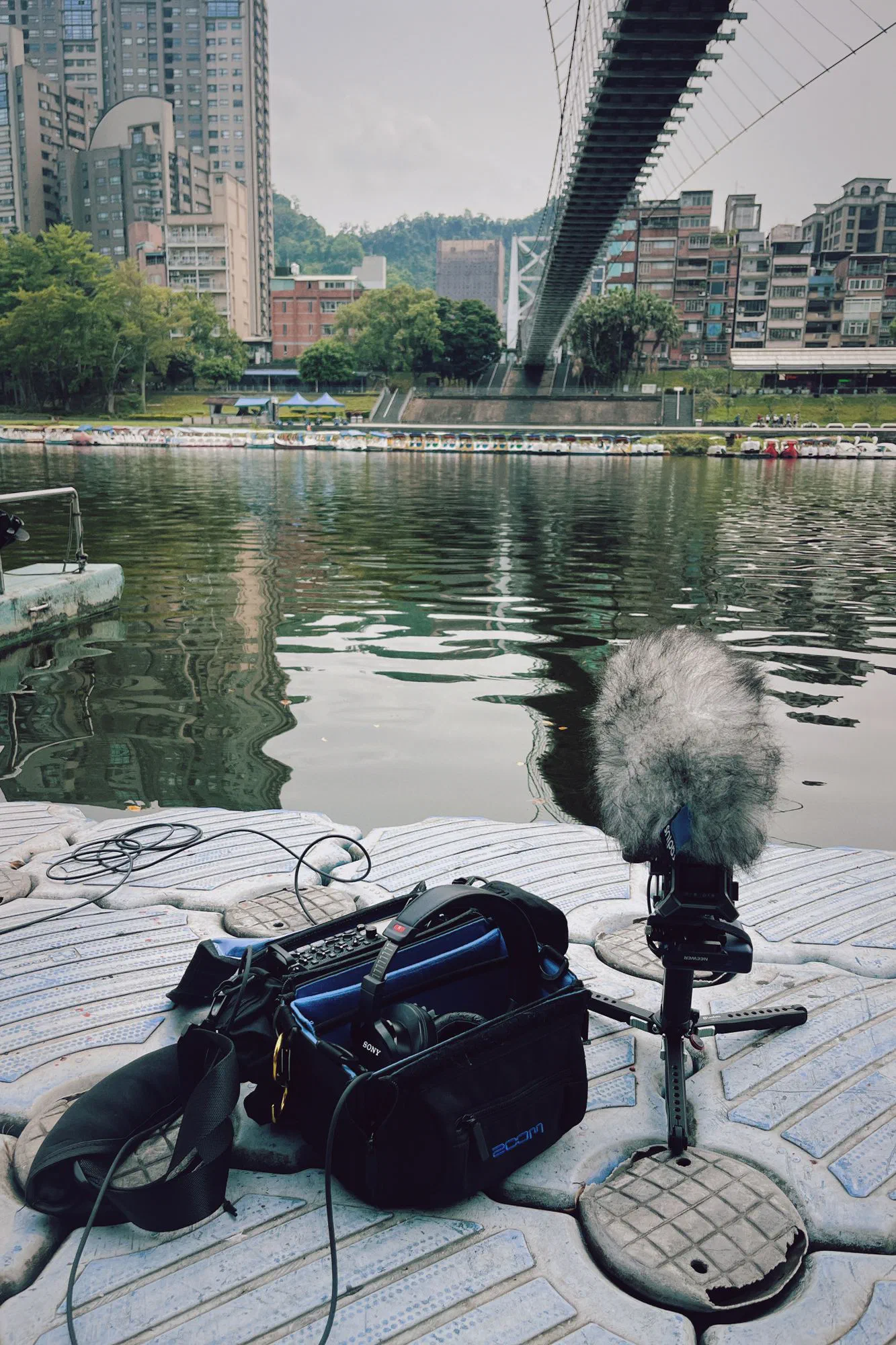
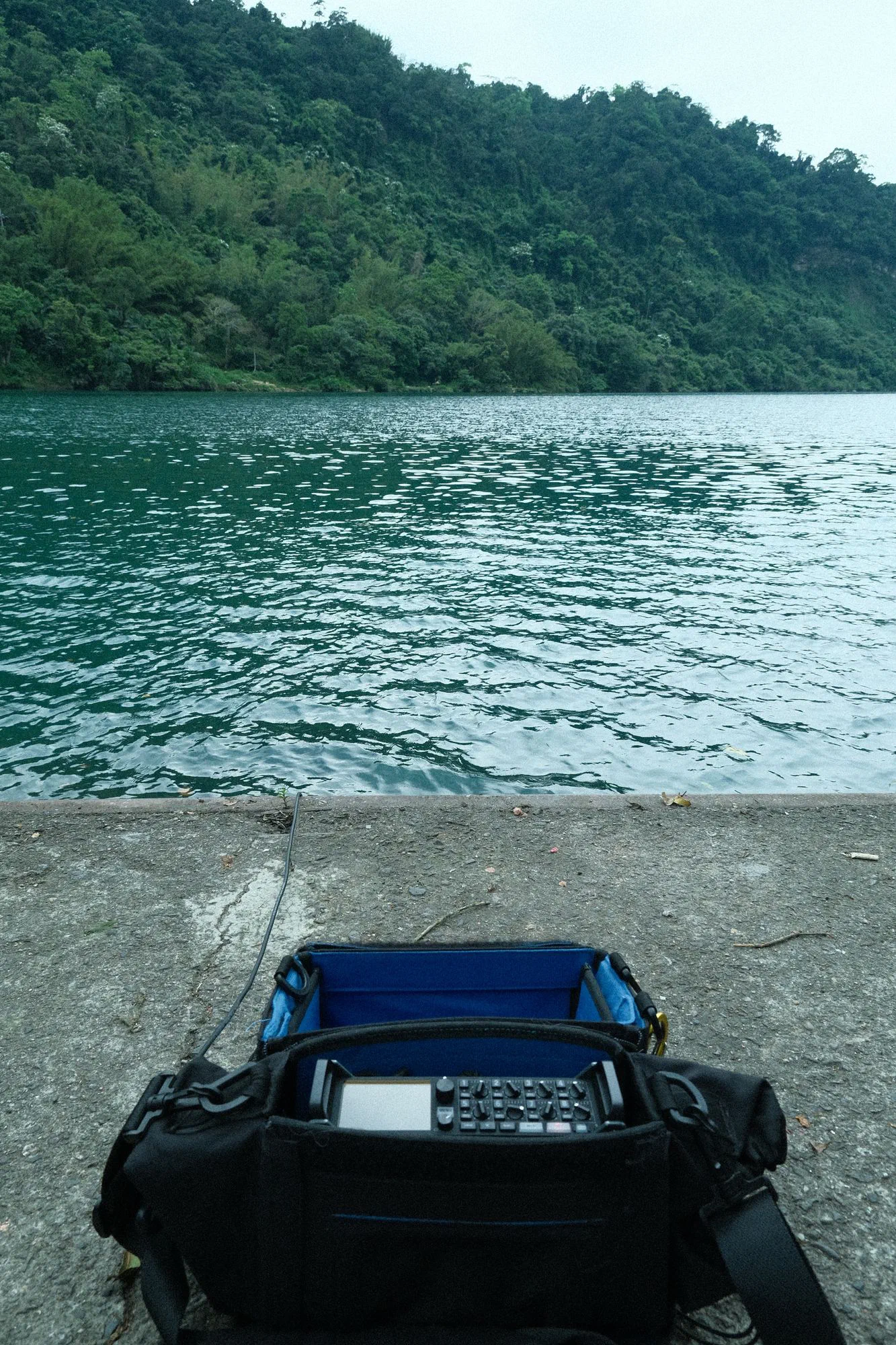
Underwater recordings were made across different sections of the Xindian River.
Downstream, low-frequency vibrations from the city travel through the water and merge with bridges, traffic and riverside infrastructure. Around Bitan, the hydrophones reveal dense and delicate traces of aquatic life. Further upstream, currents strike rocks and pass through narrow crevices, creating shifting layers of splashes, gravel and underwater friction.
Hydrophones displace listening from its familiar human position. The river is no longer only a landscape observed from above, but a living acoustic field shaped by movement, pressure, vibration and the residual sounds of the city.
The River and Human Memory
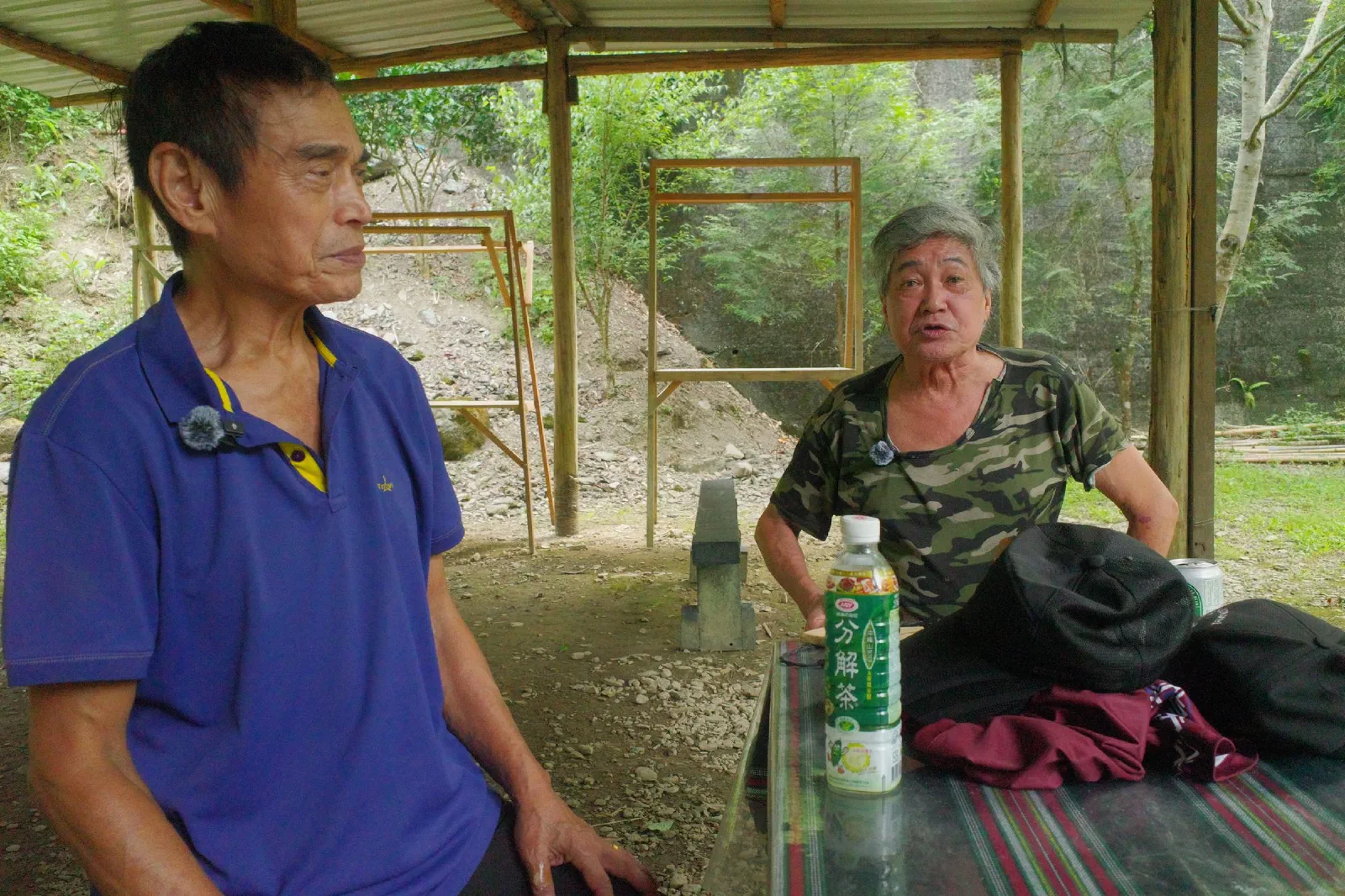
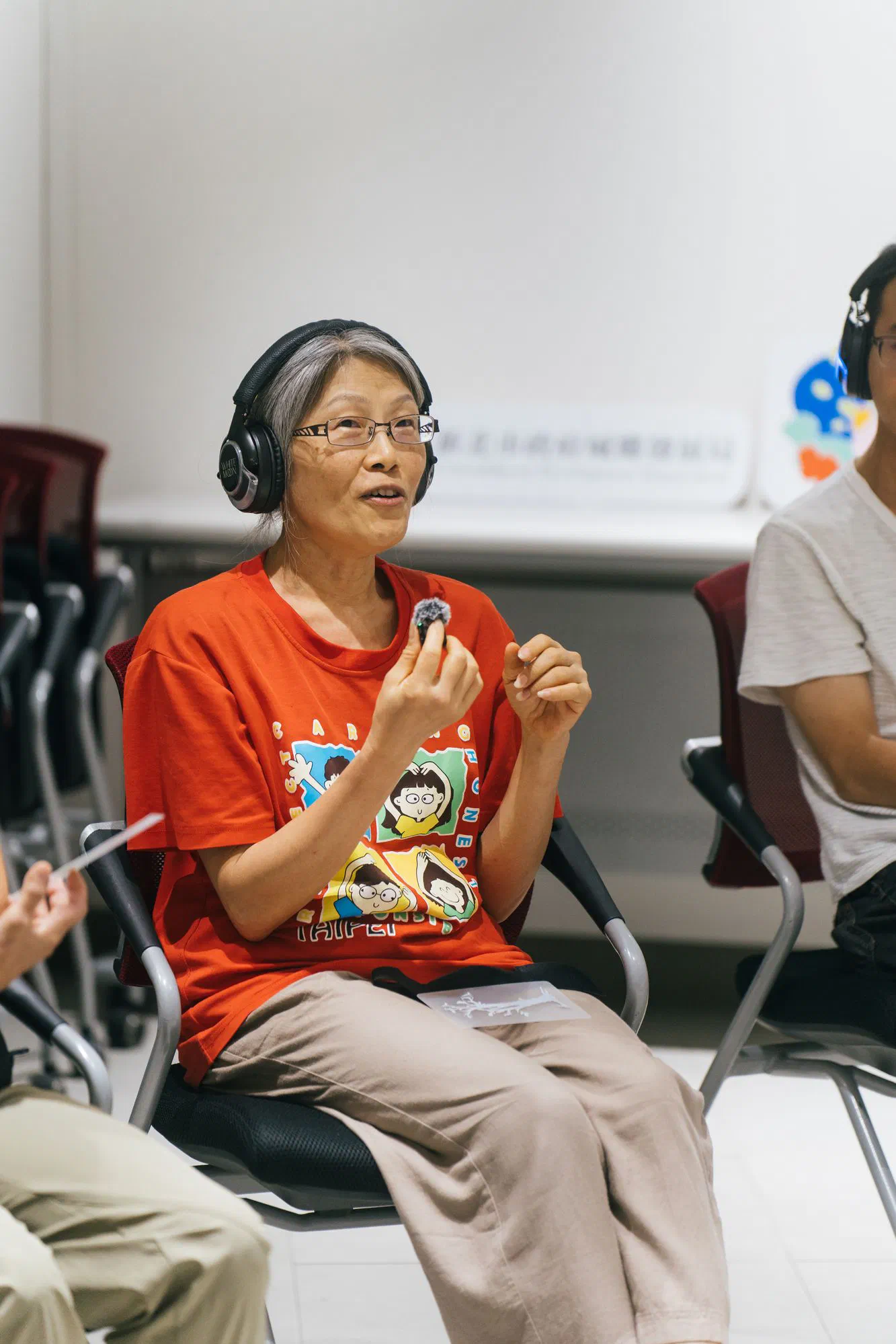
The project also gathers songs, stories and lived experiences from people whose lives are connected to the river.
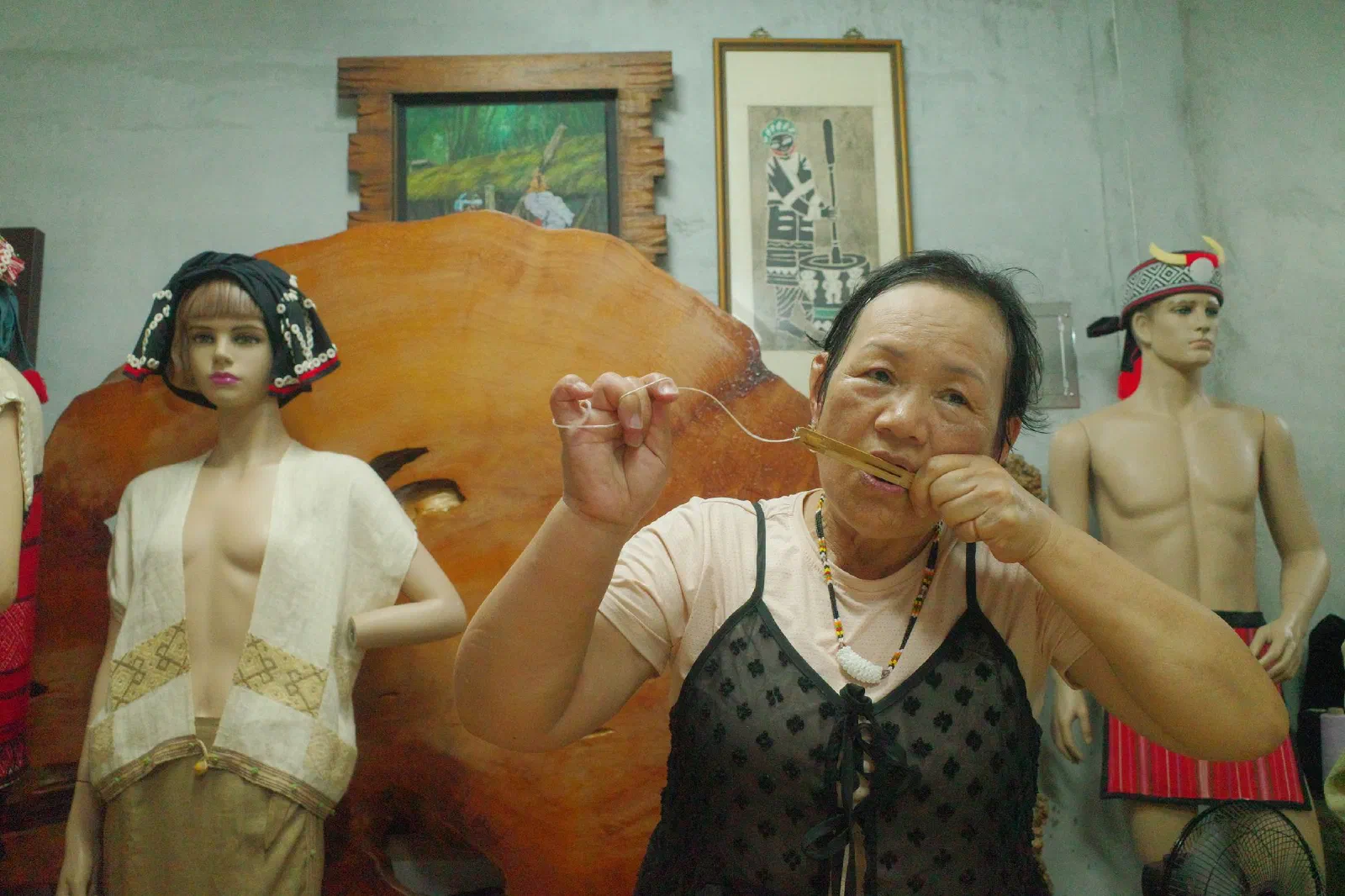
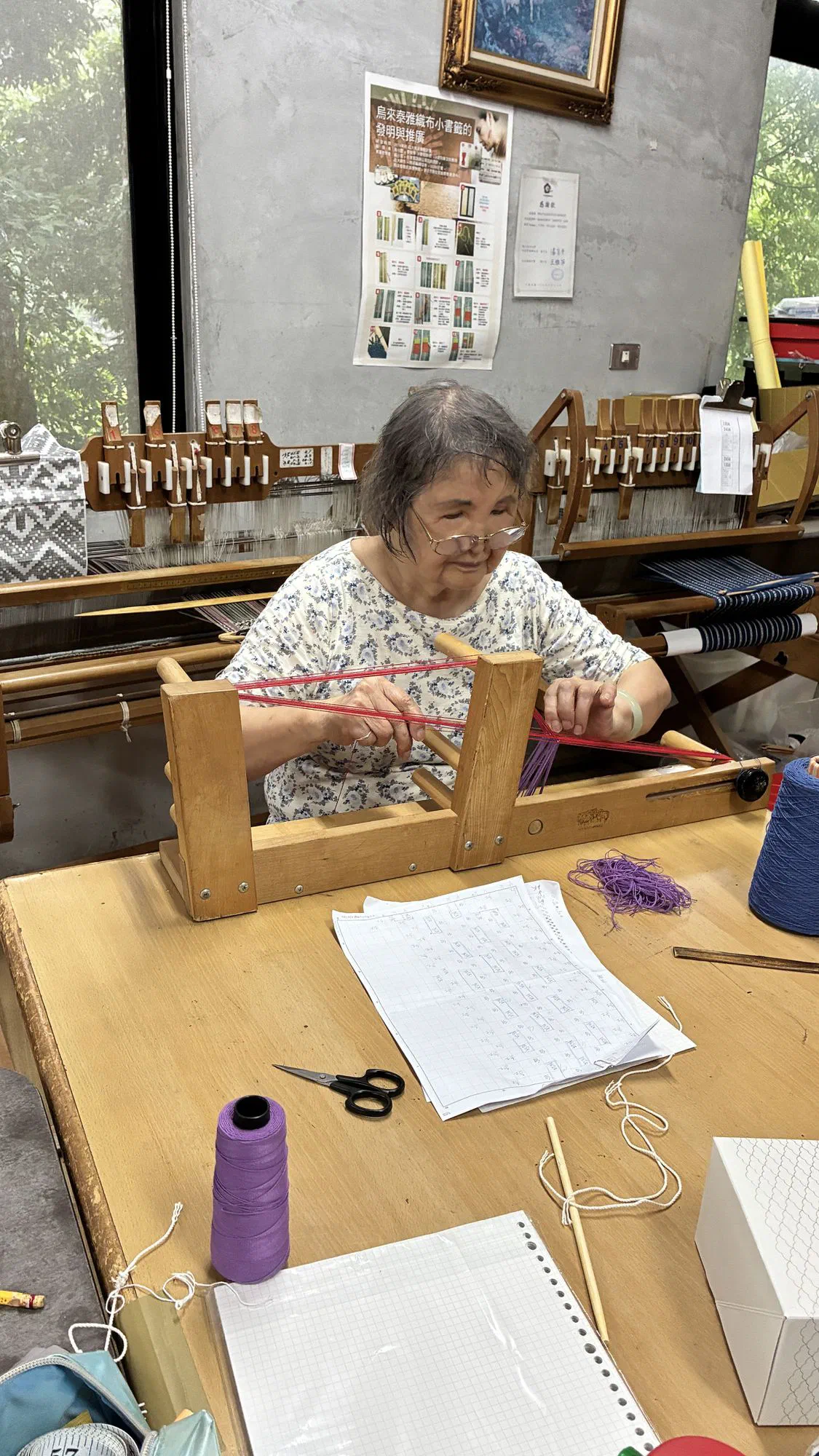
The voices of hunters, weavers, residents and local practitioners reveal how the river enters everyday life—as a route of movement, a place of gathering and labour, and a carrier of cultural memory, environmental change and personal history.
These voices do not merely explain the landscape; they form part of it. When oral narratives are placed alongside the movement of water, the landscape is no longer silent, and place becomes more than a name on a map.


Participatory Listening
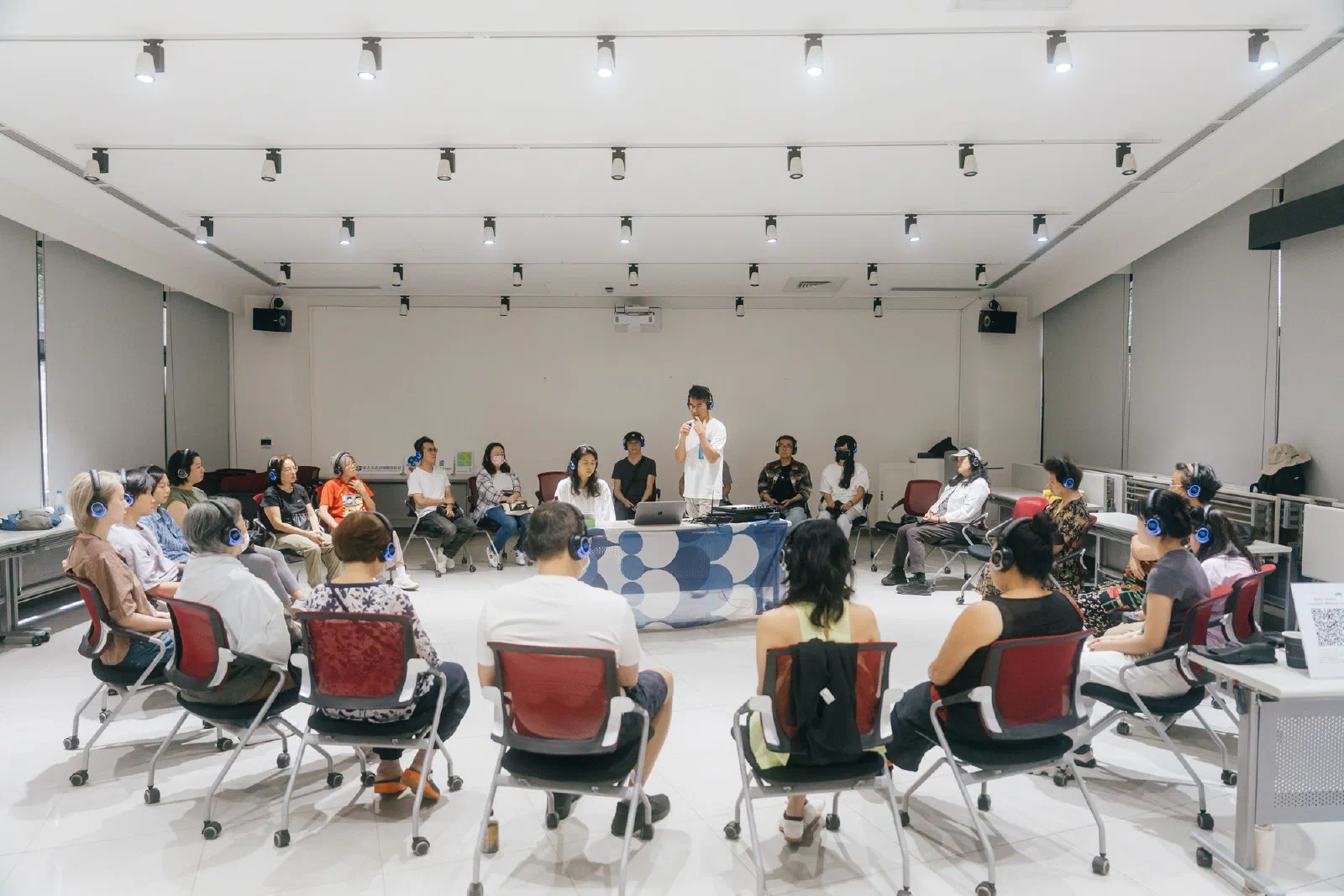
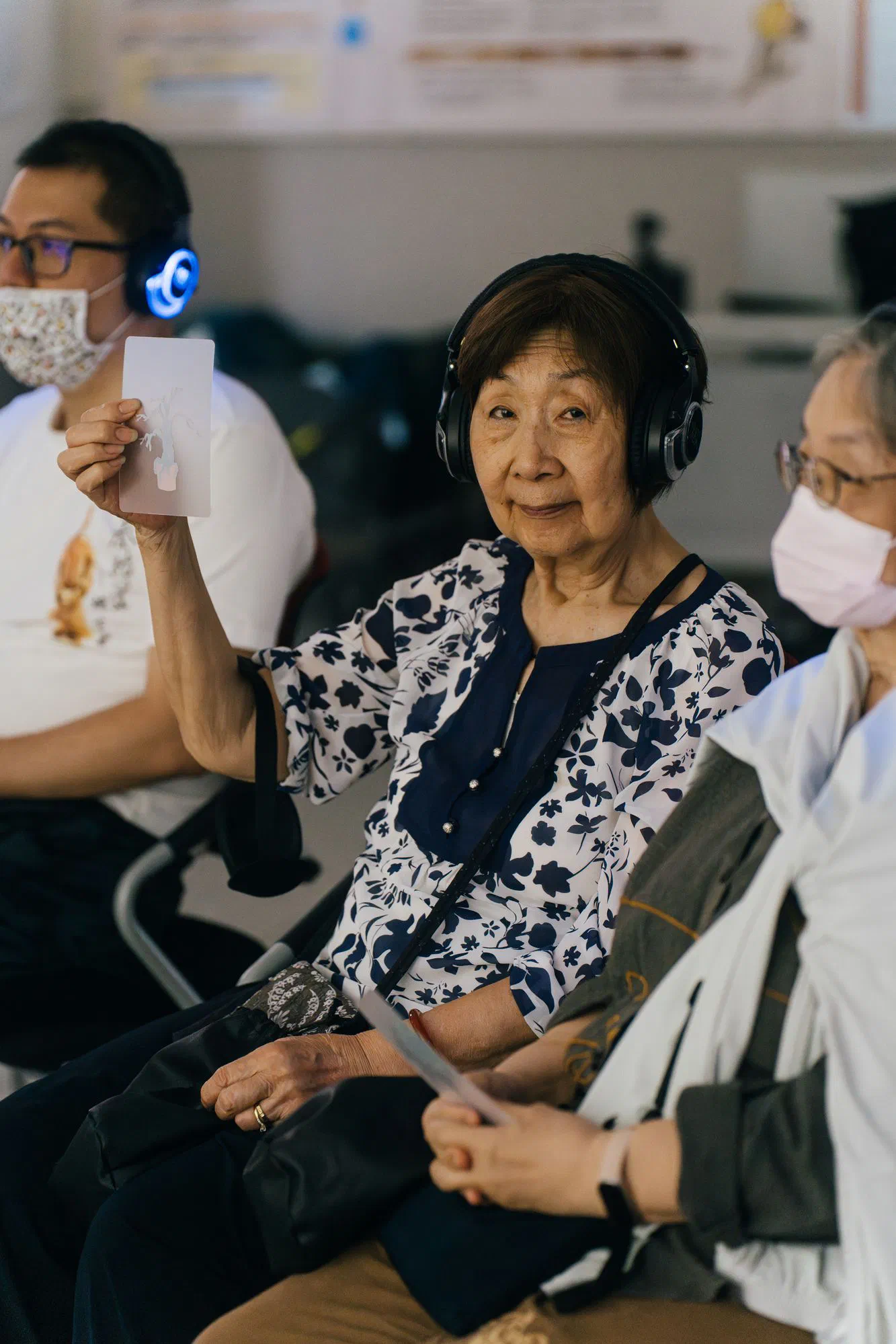
The research was further developed into a guided outdoor listening experience using wireless headphones. Participants walked through the landscape of Wenshan Farm while listening to recordings, songs and stories gathered from the upper reaches of the Xindian River. The experience brought mediated sound into contact with the ground beneath their feet, surrounding vegetation, moving air and the rhythm of their own bodies.
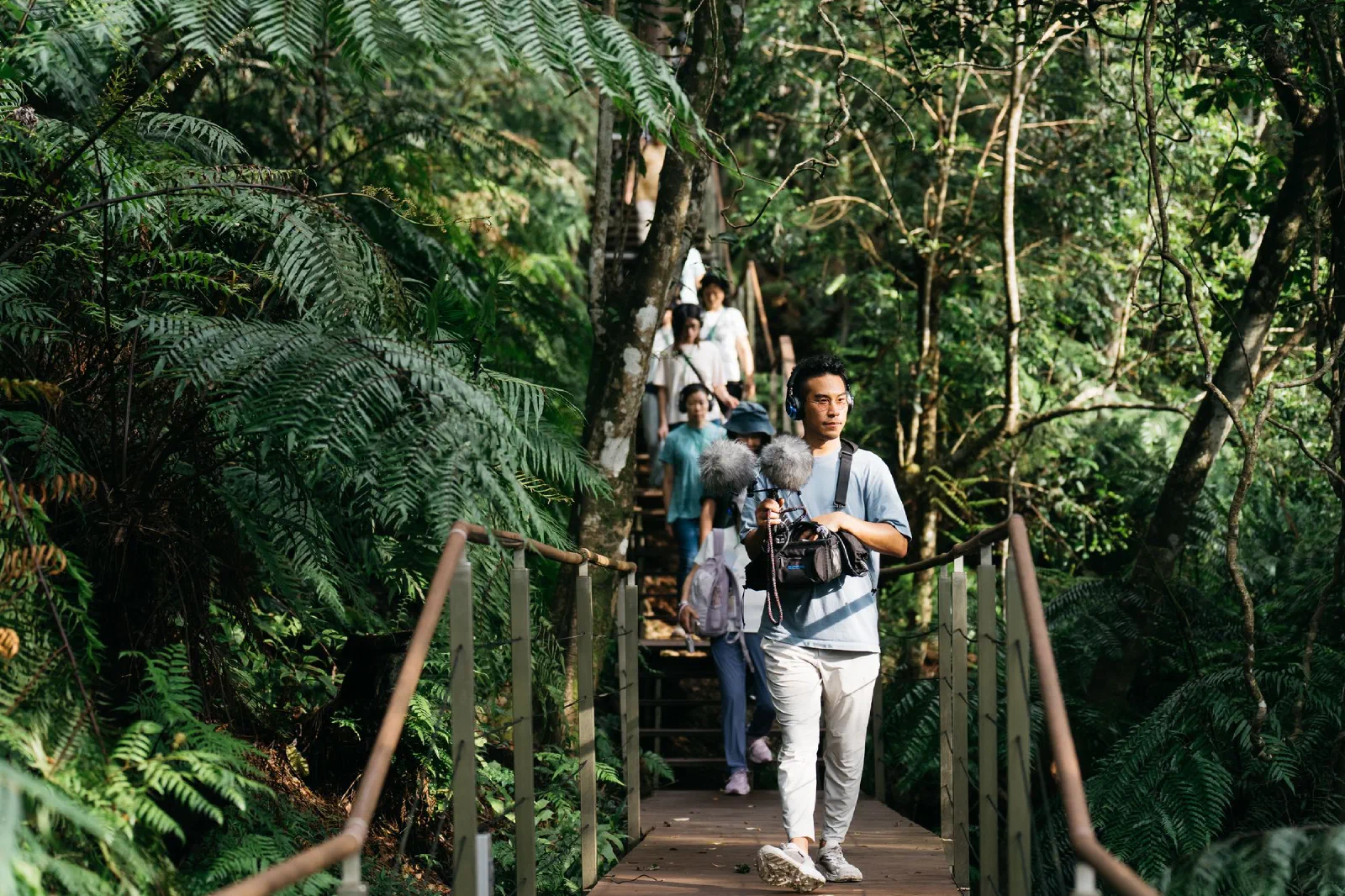
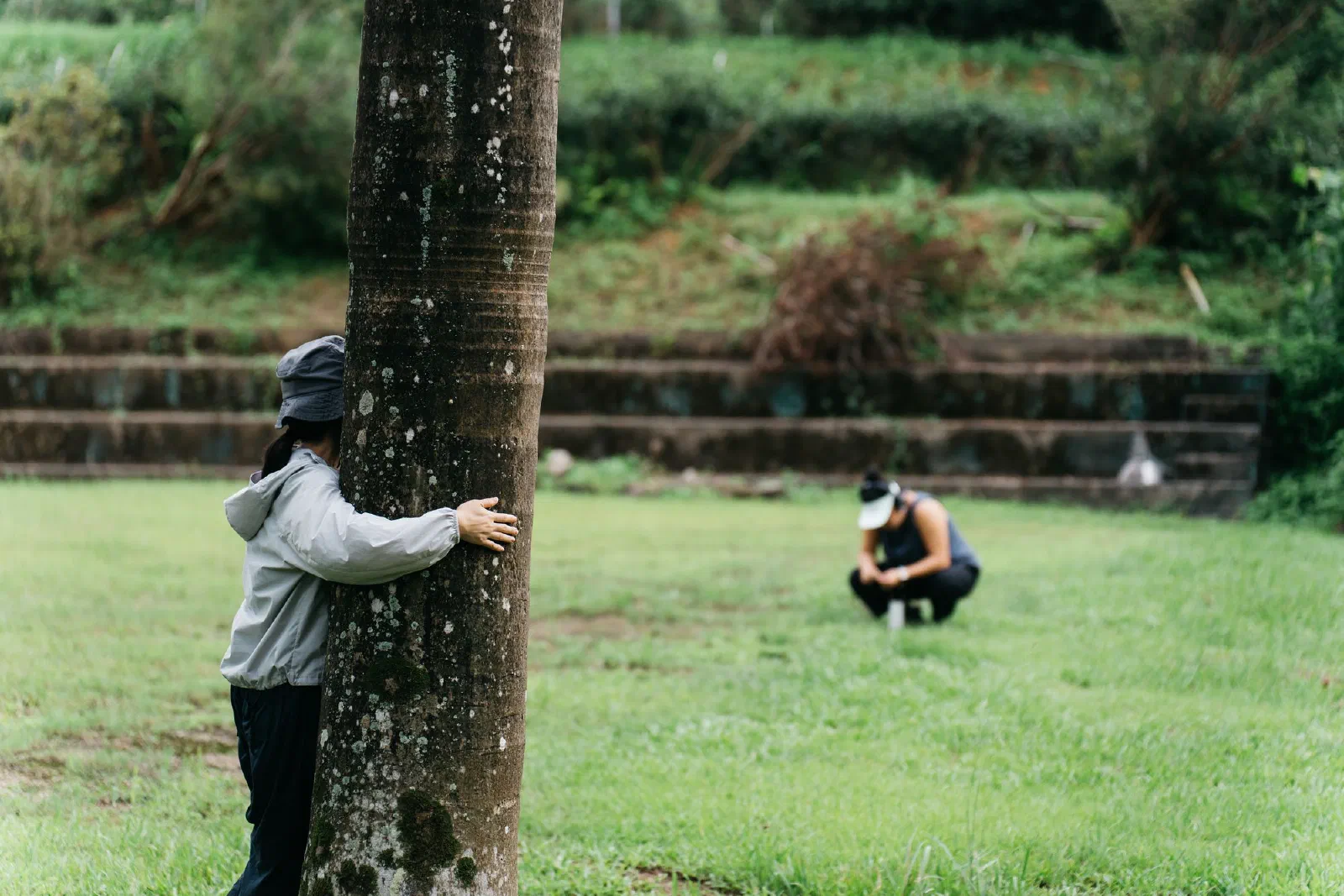
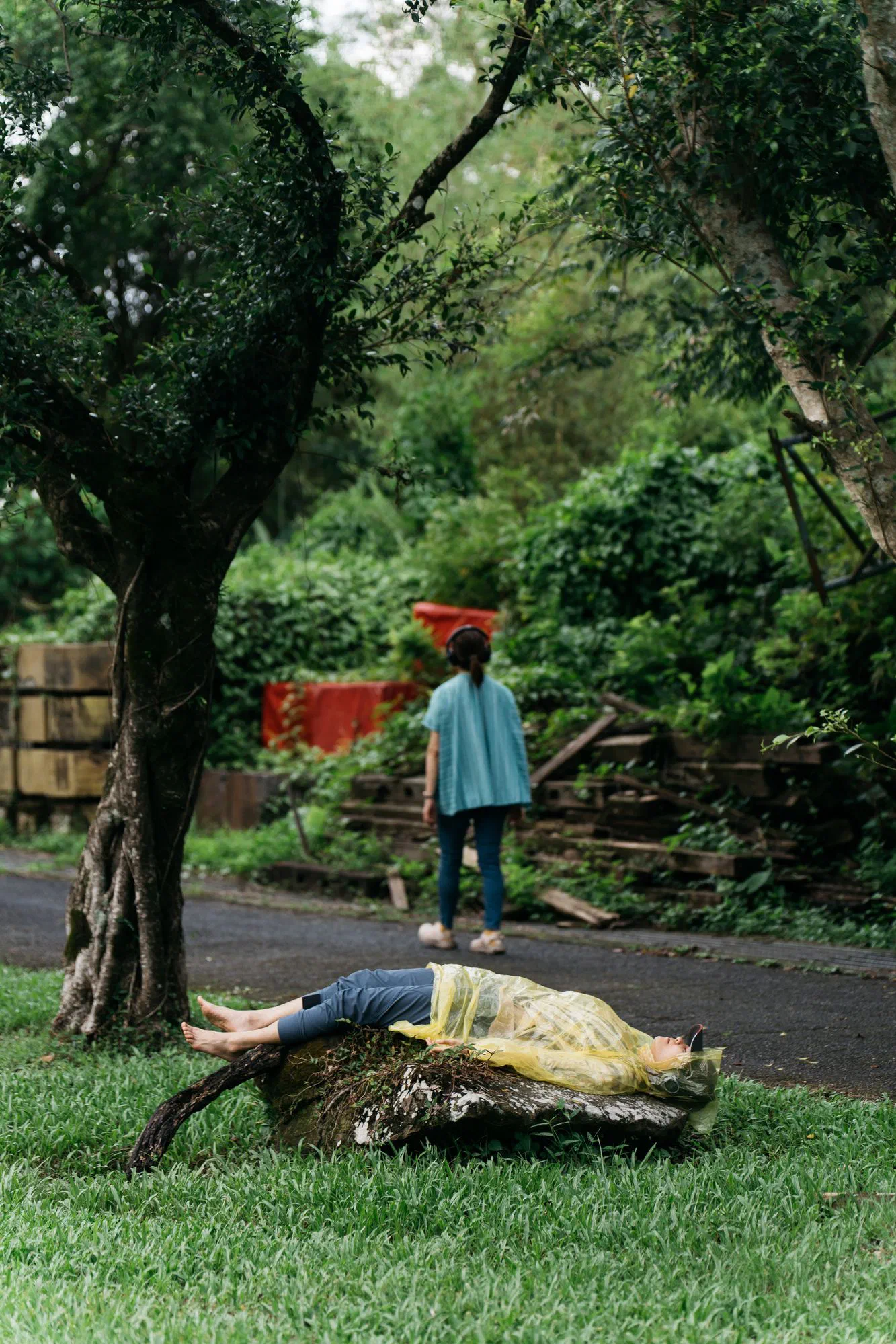
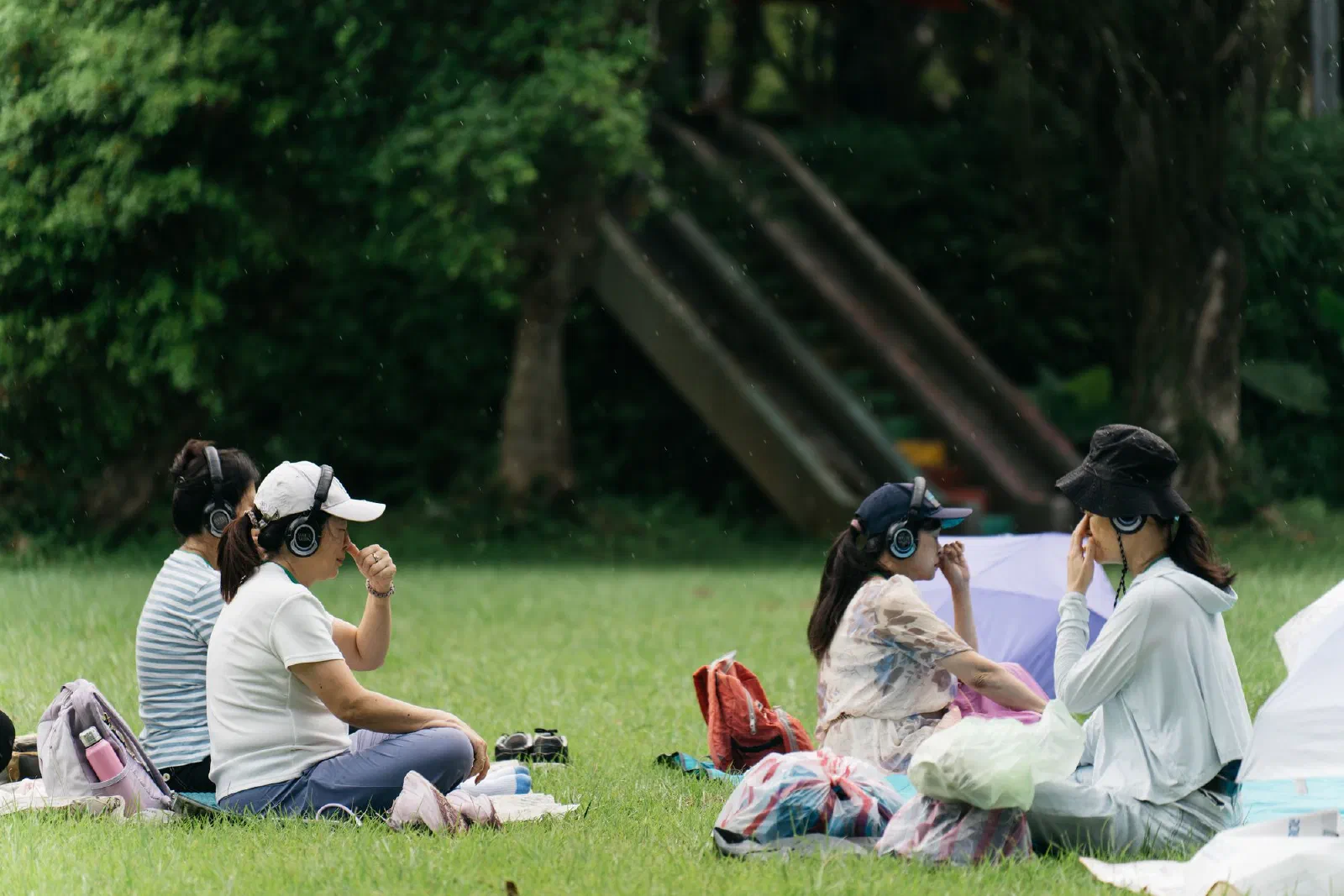
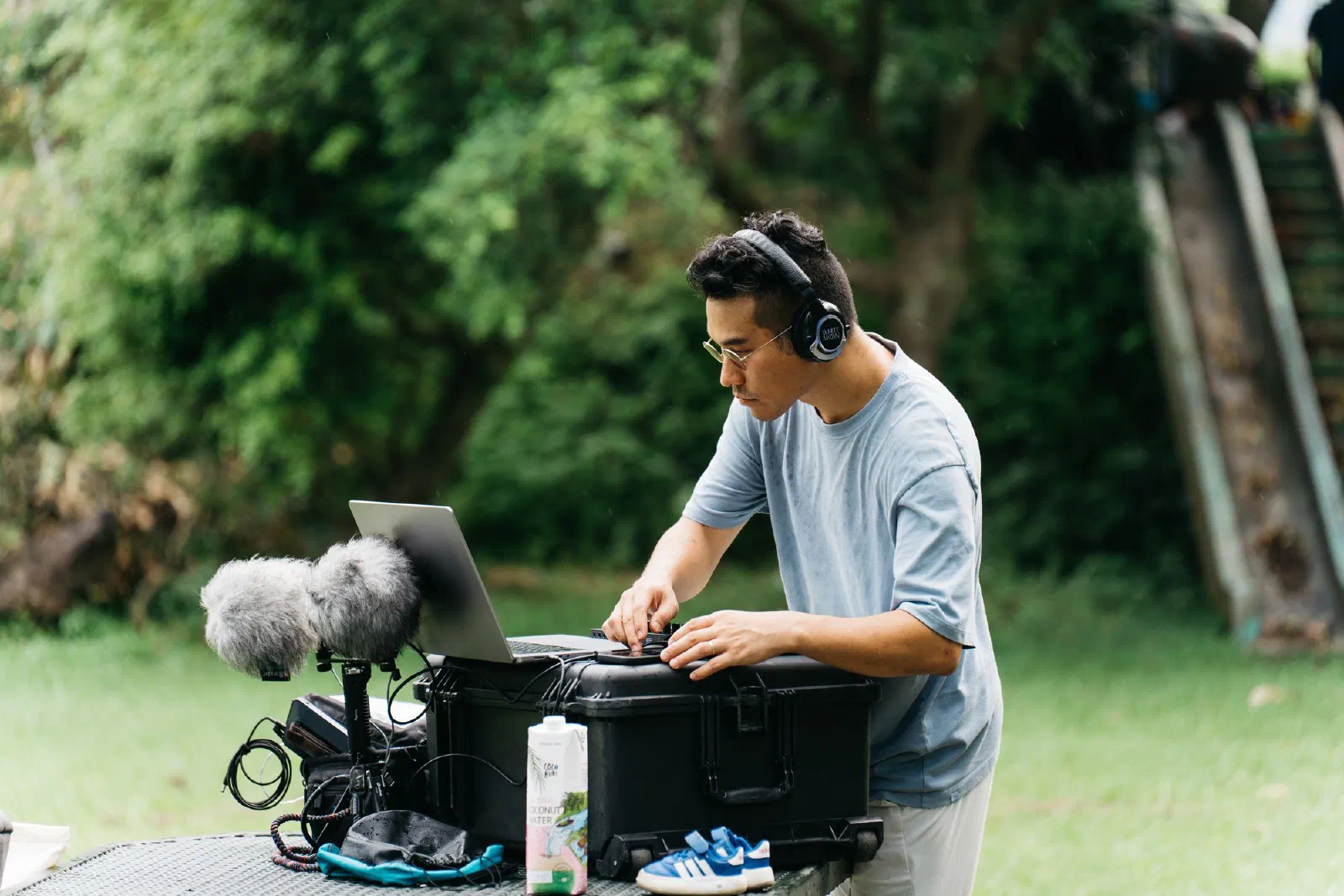
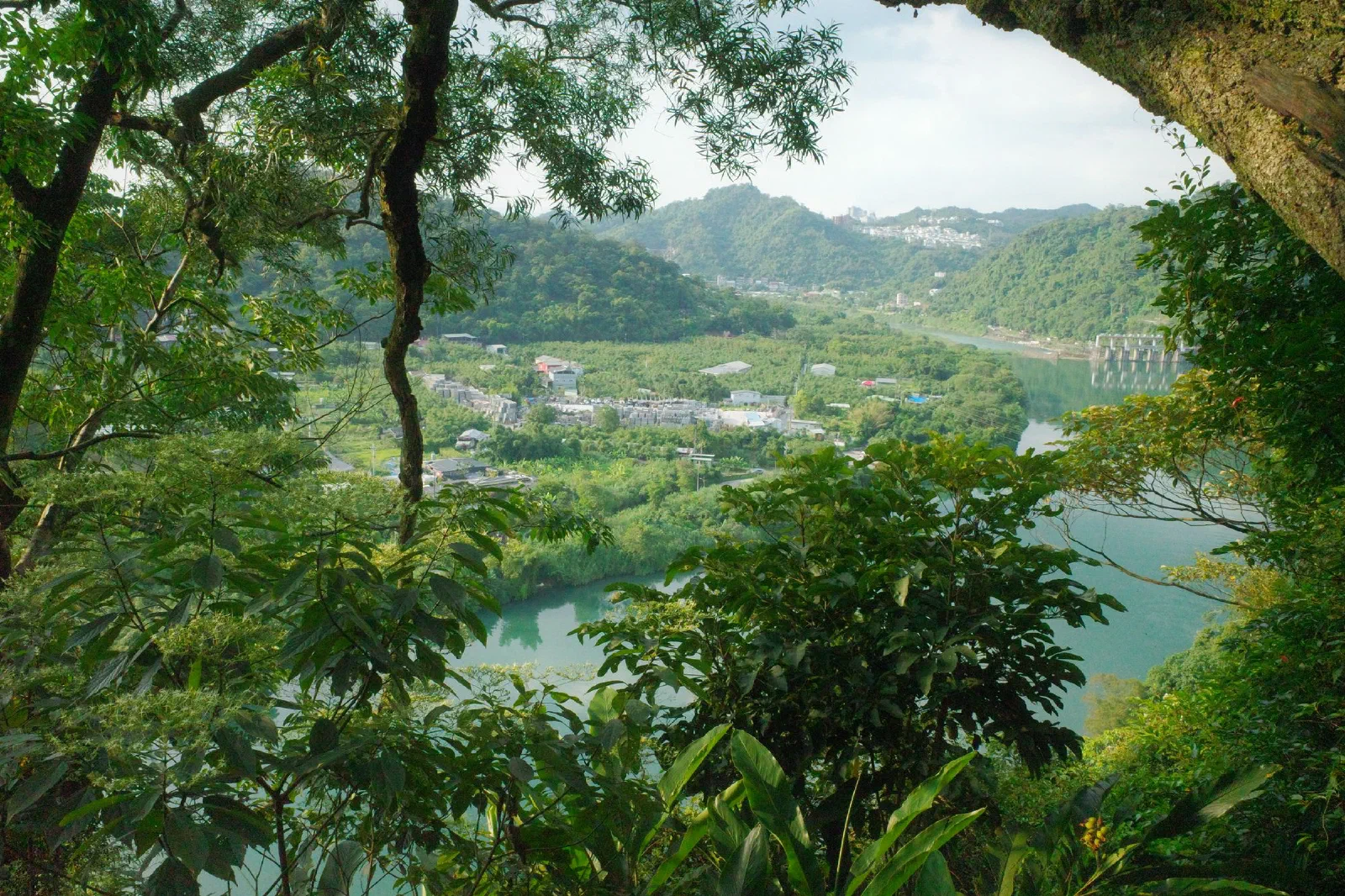
The walk concluded at an elevated viewpoint overlooking the river. From there, participants encountered the river again—this time bringing together the sounds heard through the headphones, the route experienced through the body and the landscape before them.
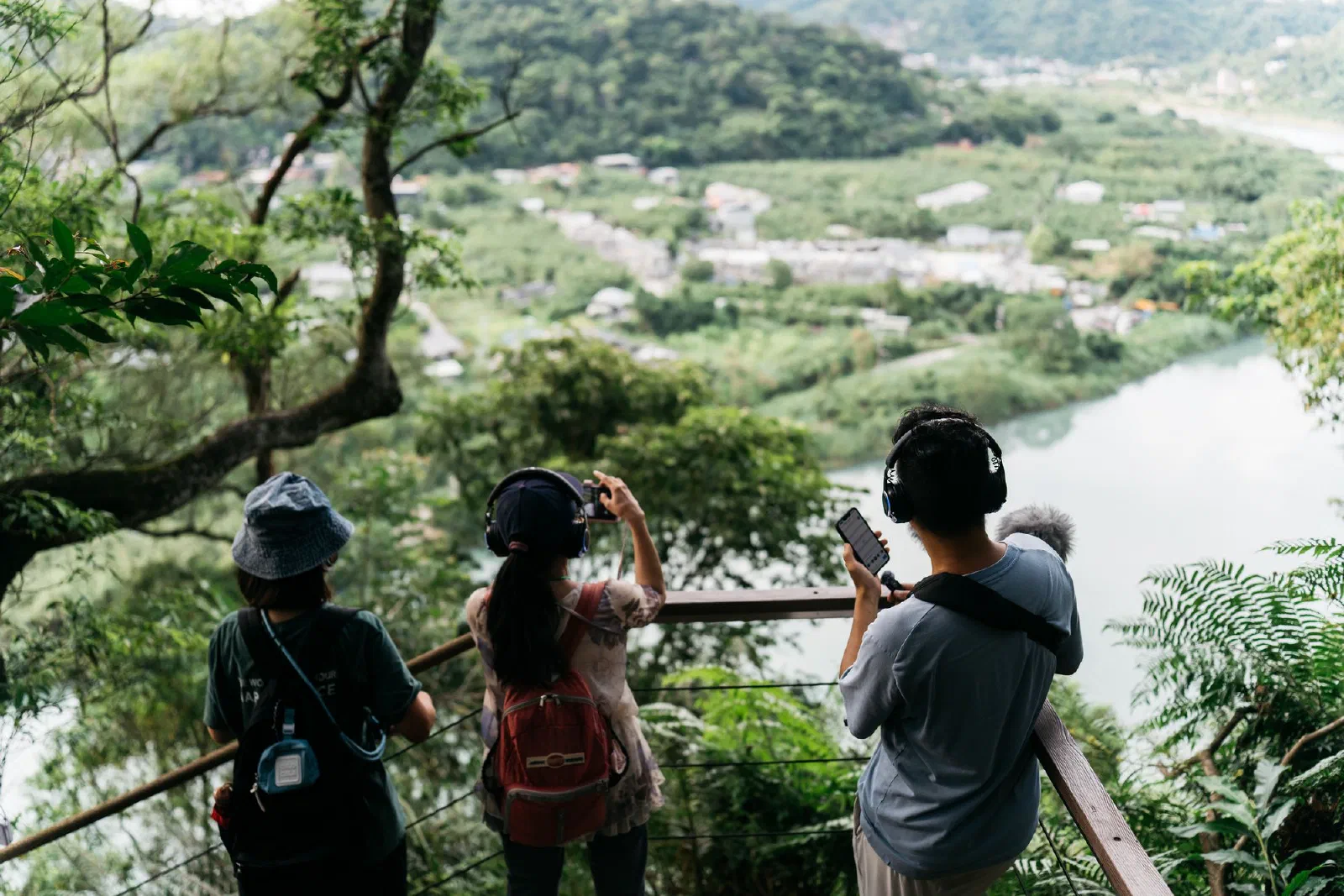
Listening here is not simply the reception of a finished narrative. It becomes a way of rebuilding relationships. Participants first enter the river through sound and then observe it from a distance, allowing a familiar landscape to disclose another depth.


Artistic Approach
For me, field recording is not only a method of documenting environmental sound. It is a practice of staying.
When the body remains in a place long enough, perception begins to move beyond its usual assumptions. Water, terrain, human activity and other forms of life emerge not as separate elements, but as forces continually passing through one another.
Along the Xindian River uses listening to open this process. The river is approached not merely as something to be viewed, managed or crossed, but as a living field with which relationships can be formed.